
| Short bed (5.5 ft / 66") | Up to 100-gal horizontal (57" L) — fits with room for tailgate clearance |
| Standard bed (6.5 ft / 78") | Up to 150–200 gal horizontal — comfortable fit for most tanks |
| Long bed (8 ft / 96") | Up to 300 gal — max practical size without a flatbed or trailer |
| Bed width at wheel wells | Typically 50–52" on full-size trucks — measure before ordering |
| Weight limit (half-ton) | 1,500–2,000 lbs payload — full 100-gal = ~875 lbs, well within range |
| Weight limit (3/4-ton) | 2,000–3,000 lbs payload — full 200-gal = ~1,700 lbs, check your sticker |
| Tank style for trucks | Horizontal "transport" or "leg" tanks — lower CG, cradle-ready |
| Fitting standard | Most transport tanks: 2" male NPT outlet, 2" or 4" fill opening on top |
Who Needs a Truck Bed Water Tank?
Truck bed water tanks solve one specific problem: getting water to a location that doesn't have a water hookup, or having a pressurized supply ready to go anywhere your truck goes. If you're running any of these operations, a truck-mounted tank is the practical solution.
- Mobile detailing & car washing: The most common use. A 100-gallon tank gives a full day of washing without needing access to a customer's spigot. Most professional mobile detailers run 100–125 gallons.
- Pressure washing contractors: Buffer tanks prevent pump cavitation when working off a low-flow residential supply. A 100-gallon buffer tank keeps a 4 GPM pressure washer fed even when house pressure drops.
- Agriculture & livestock: Hauling water to remote troughs, filling sprayers, spot-treating fields. Common sizes: 150–300 gallons.
- Fire suppression & rural property: A 200+ gallon tank with a high-flow pump gives you first-response fire capability before the fire department arrives. Valuable on rural acreage.
- Construction & dust suppression: Watering dirt roads, keeping job sites dust-free, mixing concrete. Typically 200–300 gallon setups.
- Off-grid & overlanding: Supplemental water supply for remote camps, stock tank fill-ups, emergency reserve.
- Lawn care & landscaping: Herbicide/fertilizer application when mixed in a separate tank, or water supply for sod installation and tree planting.
Sizes & Weight by Capacity
Horizontal "transport" or "nurse" tanks are the standard for truck beds — they sit flat, have a lower center of gravity than vertical tanks, and most are designed with cradle mounts or flat-bottom skids that integrate with truck beds. Here are the practical sizes:
| Capacity | Typical Dimensions (L × W × H) | Empty Weight | Full Weight | Bed Requirement |
|---|---|---|---|---|
| 50 gal | ~38" × 24" × 20" | 15–20 lbs | ~435 lbs | Any bed, midsize trucks OK |
| 100 gal | ~57" × 24" × 24" | 25–40 lbs | ~875 lbs | 5.5 ft+ bed (full-size) |
| 150 gal | ~72" × 30" × 30" | 40–55 lbs | ~1,300 lbs | 6.5 ft+ bed |
| 200 gal | ~84" × 30" × 32" | 55–75 lbs | ~1,740 lbs | 6.5 ft+ bed; check payload |
| 300 gal | ~96" × 36" × 36" | 80–110 lbs | ~2,600 lbs | Long bed only; 3/4-ton+ required |
| Dimensions are approximate — vary by manufacturer. Always verify with spec sheet before ordering. Full weight = water only + empty tank weight. | ||||
Payload & Truck Compatibility
This is the most overlooked spec when buying a truck bed water tank. Your truck's payload rating — not the towing capacity — is what matters. Payload is the maximum weight you can put in and on the truck: passengers, cargo, and any gear. It's printed on a sticker inside your driver's door jamb.
- Half-ton trucks (F-150, RAM 1500, Silverado 1500): Payload typically 1,500–2,300 lbs depending on configuration. A full 100-gallon tank (~875 lbs) is well within range. A full 200-gallon tank (~1,740 lbs) may be at or over the limit — check your specific sticker.
- 3/4-ton trucks (F-250, RAM 2500, Silverado 2500): Payload typically 2,500–4,000 lbs. Handle 200-gallon full comfortably; 300-gallon full is borderline on lighter configurations.
- 1-ton trucks (F-350, RAM 3500, Silverado 3500): Payload typically 4,000–7,000 lbs. 300 gallons full (~2,600 lbs) is well within range.
- Midsize trucks (Tacoma, Ranger, Colorado): Payload 1,000–1,500 lbs. Stick to 50-gallon tanks; a full 100-gallon tank may push the limit.
Best Truck Bed Water Tanks (2026)
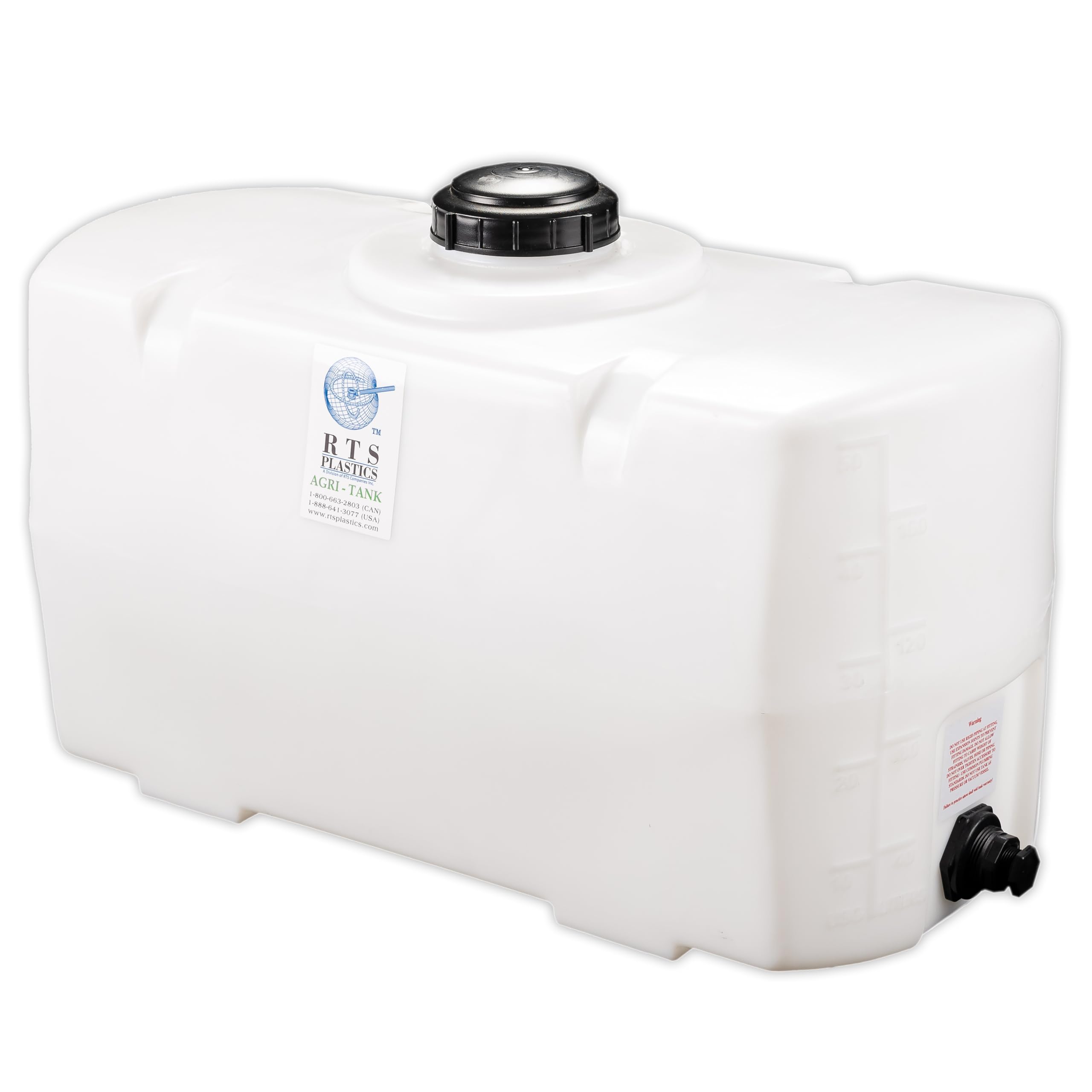
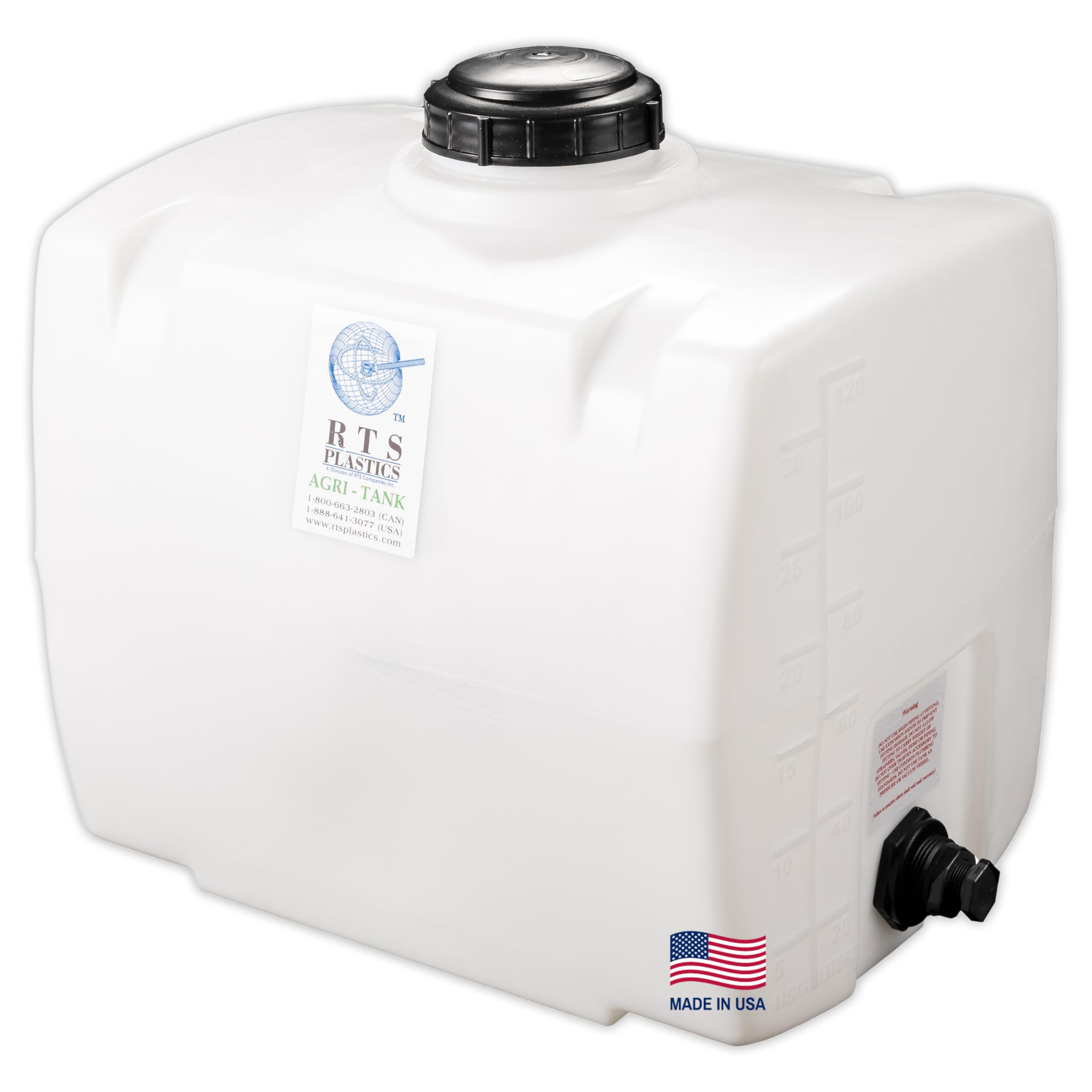
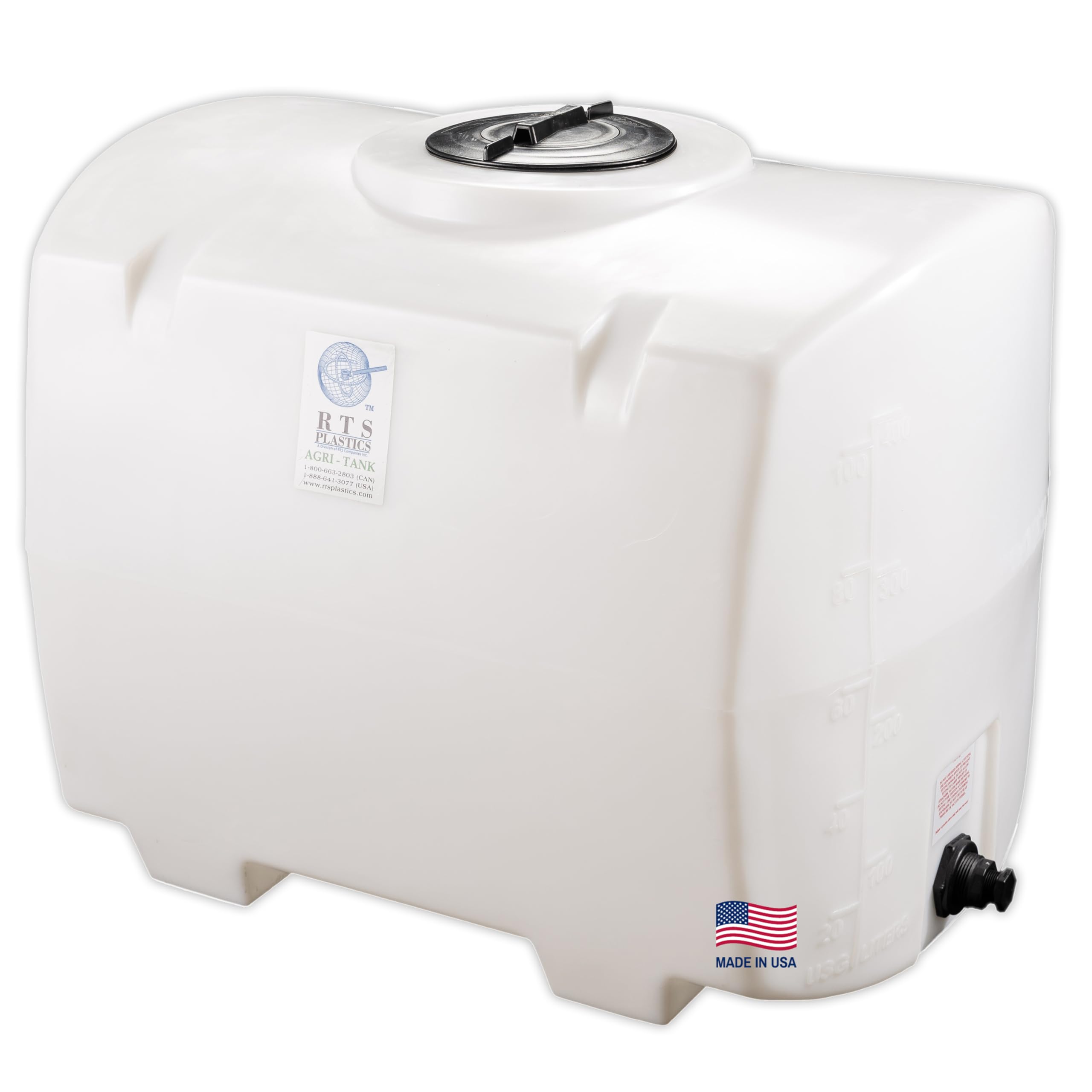
We focused on horizontal transport tanks — the right form factor for truck beds. Selection criteria: build quality, fitting size, UV resistance, cradle compatibility, and buyer feedback across ag, detailing, and contractor uses.

Pump & Plumbing Setup
The tank is just the storage — you need a pump, hose, and fittings to make it a working system. Setup varies significantly by use case.
For Mobile Detailing & Car Washing
- Pump: Shurflo 2088 (3.5 GPM, 45 PSI) or Flojet 4000 — the industry standards for low-volume, consistent pressure. Run on 12V from your truck battery or a dedicated auxiliary battery.
- Pressure: 40–60 PSI is enough for a hose-down wash. For proper pressure washing you'll need a gas-powered pressure washer fed from the tank, not a pump alone.
- Hose: 1/2" reinforced garden hose or ½" braided poly hose. Keep it short — long runs kill pressure at low-GPM pumps.
- Filter: Inline 50-mesh strainer before the pump protects the pump from debris. Essential, cheap.
For Pressure Washing (Buffer Tank)
- Setup: Garden hose from house supply fills your truck tank. Pressure washer pulls from the tank via a 2" outlet and ¾" supply line. The tank acts as a buffer — your pressure washer never cavitates even when house supply flow drops.
- Flow required: A 4 GPM pressure washer needs at least 4 GPM of supply. A 100-gallon buffer gives you 20+ minutes of run time if supply cuts out entirely.
- No 12V pump needed — the pressure washer pulls from the tank via gravity/siphon. Just plumb the tank outlet to the pressure washer inlet with the right adapters.
For Agriculture & Fire Suppression
- Pump: A 12V high-flow pump (Remco, Flojet 18 series) or a PTO/gas-powered centrifugal pump for fire suppression. Fire suppression needs 25+ GPM — a 12V pump won't cut it.
- Fittings: 2" cam-lock fittings are the standard for agricultural tanks and fire departments — quick-connect, no threading required under pressure.
- Sprayer boom: For herbicide/fertilizer use, a 12V diaphragm pump (Hypro, Shurflo) rated for chemical resistance is essential. Standard water pumps degrade quickly with ag chemicals.
| Use Case | Recommended Pump | GPM Needed | Approx. Cost |
|---|---|---|---|
| Mobile detailing | Shurflo 2088 (12V) | 3–5 GPM | $60–$120 |
| Pressure washing buffer | None (gravity feed) | N/A | $0–$30 for fittings |
| Lawn care / irrigation | Shurflo 4008 (12V) | 4–8 GPM | $80–$160 |
| Agriculture spray | Hypro D30 diaphragm | 5–15 GPM | $150–$350 |
| Fire suppression | Gas centrifugal (Banjo, Gorman-Rupp) | 25–75 GPM | $300–$900 |
How to Secure a Tank in Your Truck Bed
An unsecured water tank is a projectile. A full 100-gallon tank at highway speed, if it breaks free, is an 875-lb missile. Securing it properly is not optional.
- Ratchet straps: Use two straps rated for at least 1,500 lbs working load limit (WLL) each, run over the tank in an X pattern and hooked to the truck's factory tie-down anchors. Never use bungee cords for this application.
- Tank cradles: Most horizontal transport tanks are designed to rest in a formed poly or steel cradle that bolts to the truck bed. Cradles distribute load and prevent the tank from rolling sideways. Highly recommended for regular use.
- Bed liner / non-slip mat: A rubber mat or spray-in bed liner prevents sliding. Place a rubber pad under the cradle or tank to protect both the bed and the tank bottom.
- Safety chain: On trailers and for fire apparatus, a safety chain as a backup is standard practice. On pickup trucks it's less common but not a bad idea for heavy tanks.
- Fill at the destination when practical: A 100-gallon tank is easy to transport empty and fill on-site. This keeps your truck under payload, eliminates sloshing risk on highways, and makes it easier to secure the tank without load shifting.
Use Case Breakdowns
Mobile Detailing Setup — 100-Gallon Recommendation
The standard mobile detailing rig runs a 100-gallon horizontal transport tank in the bed of a half-ton truck. The Norwesco 100-gallon horizontal (57" × 24") fits comfortably in a 6.5-ft bed with the tailgate closed. Pair it with a Shurflo 2088 pump, 25 feet of ½" braided hose, a flow-through wash brush or gun, and an inline filter. Total system cost including pump and fittings: $350–$550. The tank holds enough for 8–12 full vehicle washes before needing a refill.
Pressure Washing Buffer — 100-Gallon Recommendation
If you're operating a pressure washer off residential spigots (which often flow 2–3 GPM) and your machine pulls 4+ GPM, you need a buffer tank. The setup is simple: fill the tank from a hose between jobs, then feed your pressure washer from the tank outlet. No 12V pump needed — gravity and the pressure washer's inlet draw do the work. A 100-gallon buffer gives a 4 GPM machine 25 minutes of run time even if supply flow is zero.
Agriculture / Livestock — 200-Gallon Recommendation
For hauling water to remote troughs or spot-treating fields, a 200-gallon horizontal tank on a 3/4-ton truck is the working standard. Pair it with a 12V Flojet or Remco transfer pump and 2" cam-lock fittings for fast connections. A full 200-gallon load is ~1,740 lbs — within range for a properly configured 3/4-ton but tight on some half-ton configurations. Check your door jamb sticker.
Rural Fire Suppression — 200–300-Gallon Recommendation
A skid-mounted fire suppression unit combines a 200–300-gallon tank with a gas-powered centrifugal pump (25–75 GPM), 100–200 feet of 1.5" fire hose, and a forestry nozzle. This provides meaningful first-response capability before fire department arrival on rural property. Skid units are typically purchased as complete systems from manufacturers like Reel-Tech, Aero-Tec, or local ag suppliers. Expect to spend $2,500–$6,000 for a complete ready-to-run skid. This goes beyond a simple tank-in-the-bed setup.
Frequently Asked Questions
For short-bed trucks (5.5 ft), a 100-gallon horizontal transport tank (typically 57" long) fits with the tailgate up. Standard-bed trucks (6.5 ft) can fit 100–150-gallon horizontal tanks comfortably. Long-bed trucks (8 ft) can fit up to 200–300 gallons. Always measure your bed at the wheel wells (typically 50–52" wide on full-size trucks) before ordering — some tanks are wider than they look in spec sheets.
Water weighs 8.345 lbs per gallon. A full 100-gallon tank contains ~835 lbs of water plus the tank itself (~30 lbs), for about 865 lbs total. A full 200-gallon tank runs approximately 1,740 lbs total. Always verify your truck's payload rating — it's on the door jamb sticker — before loading. Half-ton trucks can typically handle 100 gallons full; 200 gallons full is borderline and depends on your specific configuration.
You can use either, but horizontal transport tanks are purpose-built for truck beds: they sit flat, have a lower center of gravity, and most include flat-bottom skids or molded cradle mounts. Vertical tanks are harder to secure and have a higher CG that makes them more prone to shifting. For regular transport use, stick with a horizontal transport or leg tank.
Gravity feed works for filling lower containers — open the outlet valve and let gravity do the work. For spraying, washing, or feeding a pressure washer from the tank, you'll need a pump. 12V pumps (Shurflo, Flojet) handle most detailing and low-flow applications. For pressure washing buffer duty, no pump is needed — the pressure washer pulls from the tank. For high-flow ag or fire use, a gas-powered centrifugal pump is required.
A nurse tank (also called a supply tank or transport tank) is a portable tank mounted in a truck bed or trailer that supplies another working system — typically to refill a pressure washer, spray rig, or remote livestock trough. The nurse tank holds the water; a pump and hose move it where it needs to go. The term is most common in agriculture and fire suppression contexts.
Use two ratchet straps rated for at least 1,500 lbs WLL each, secured to your truck's factory tie-down anchors. Run them over the tank in an X or parallel pattern. For regular use, a poly or steel cradle bolted to the truck bed is far more secure and protects both the tank and the bed from abrasion. Never use bungee cords for anything heavier than 50 lbs. Consider filling at your destination to avoid highway transport of a heavy sloshing load.
Related Guides

Water and wastewater treatment professional with 18+ years of hands-on industry experience. Holds a Grade IV Wastewater Certification and has operated systems ranging from frac tank flow equalization setups to refinery DAF units and metals pretreatment facilities. He founded TankAuthority to bring real operator knowledge to water storage decisions.