How RV Demand Pumps Work
Every 12V RV water pump is a diaphragm demand pump — a rubber diaphragm flexes to pull water from the tank and push it through the plumbing. A pressure switch monitors line pressure and turns the pump on when pressure drops (you open a tap) and off when it builds back up (you close the tap). This is the "on-demand" design that replaced older continuous-run pumps.
The number of chambers (3-chamber vs 5-chamber) determines flow smoothness — more chambers mean the pump fires more frequently in smaller pulses, which evens out the pressure and reduces the pulsing sound. A 5-chamber pump at the same GPM rating sounds noticeably smoother and quieter than a 3-chamber pump.
How to Size Your RV Pump
| Rig Type / Use | Min GPM | Min PSI | Amp Draw | Recommendation |
|---|---|---|---|---|
| Van / Class B, solo or couple, one fixture at a time | 3.0 GPM | 45 PSI | 5–7A | Shurflo 4008 or SEAFLO 33 |
| Class C, 1–2 adults, occasional simultaneous use | 3.5–4.0 GPM | 50–55 PSI | 7–9A | Shurflo 4008 or SEAFLO 42 |
| Class A / fifth wheel, family, residential feel | 5.0+ GPM | 55–70 PSI | 10–14A | SEAFLO 42 or Gidrox 5.0 |
| Full-timer, multiple simultaneous fixtures | 5.5–7.5 GPM | 60–70 PSI | 12–18A | Kohree 7.5 or hzhdven 7GPM |
| Shore power only, campground use | 5.5+ GPM | 75 PSI | AC power | TDRSUPER 110V booster |
Shurflo vs Generic — The Honest Answer
The Shurflo 4008 has been the OEM standard pump in North American RVs for 20+ years. Thousands of RVs came from the factory with one installed. What that means practically: when it fails mid-trip (and all pumps eventually fail), you can find a replacement diaphragm kit at a Walmart in rural Montana. You cannot find parts for a Gidrox or ECO-WORTHY at any physical store in North America.
If you camp year-round or travel long distances from cities, buy the Shurflo or SEAFLO. If you weekend-camp within two hours of home and price is a real constraint, a well-reviewed generic at 3.5–5.0 GPM will serve you fine — just carry a spare.
Top Picks
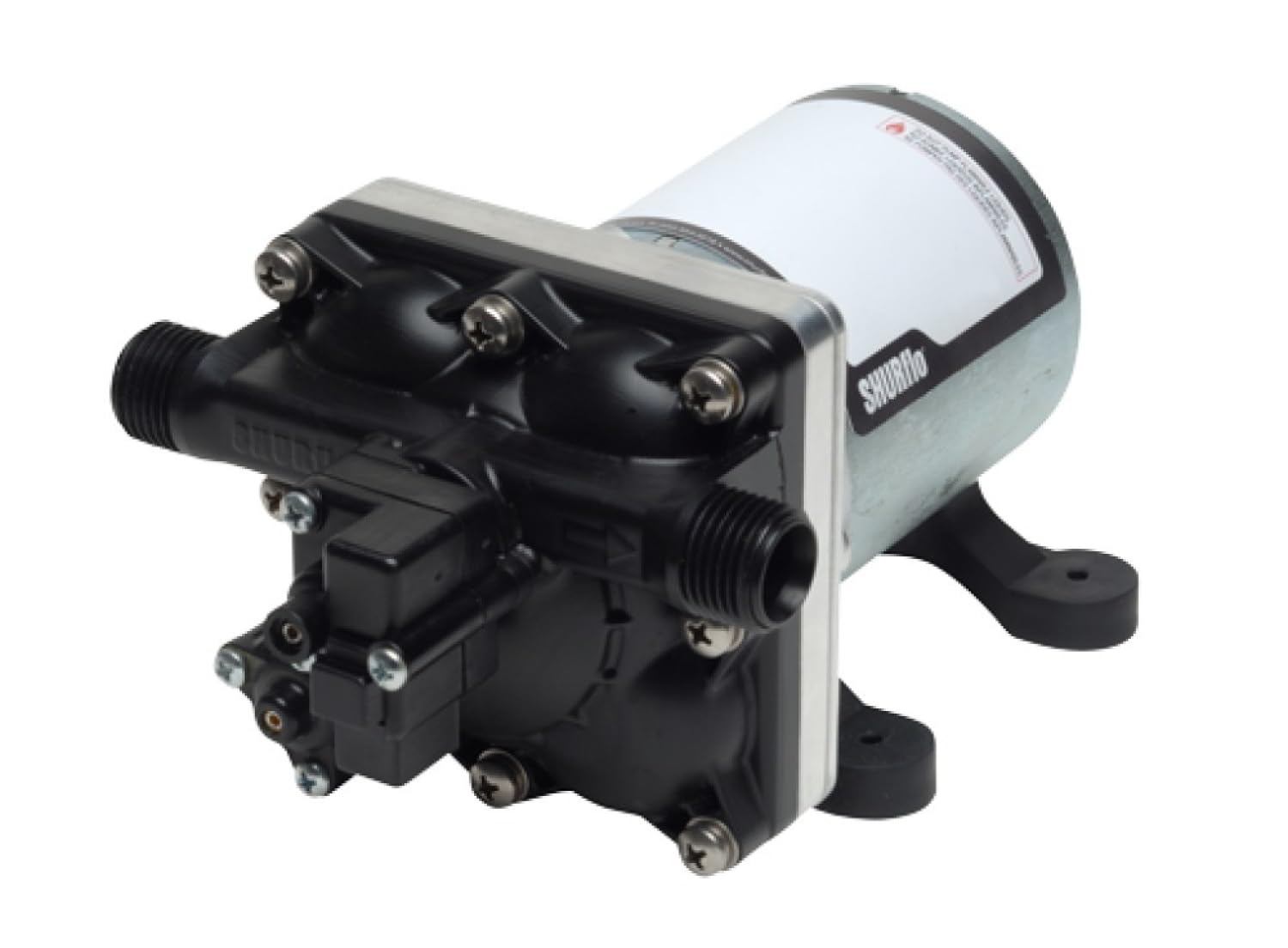
- Industry standard — replacement parts at every RV dealer, Walmart, and Amazon
- Bypass valve eliminates short-cycling
- 55 PSI provides solid fixture pressure
- Direct-fit replacement for most OEM pump locations

- Variable bypass significantly reduces cycling frequency and noise
- 4-year warranty — longest in this class
- Vibration-absorbing base cuts transmitted noise to floor
- 55 PSI / 3.0 GPM matches or exceeds most OEM specs
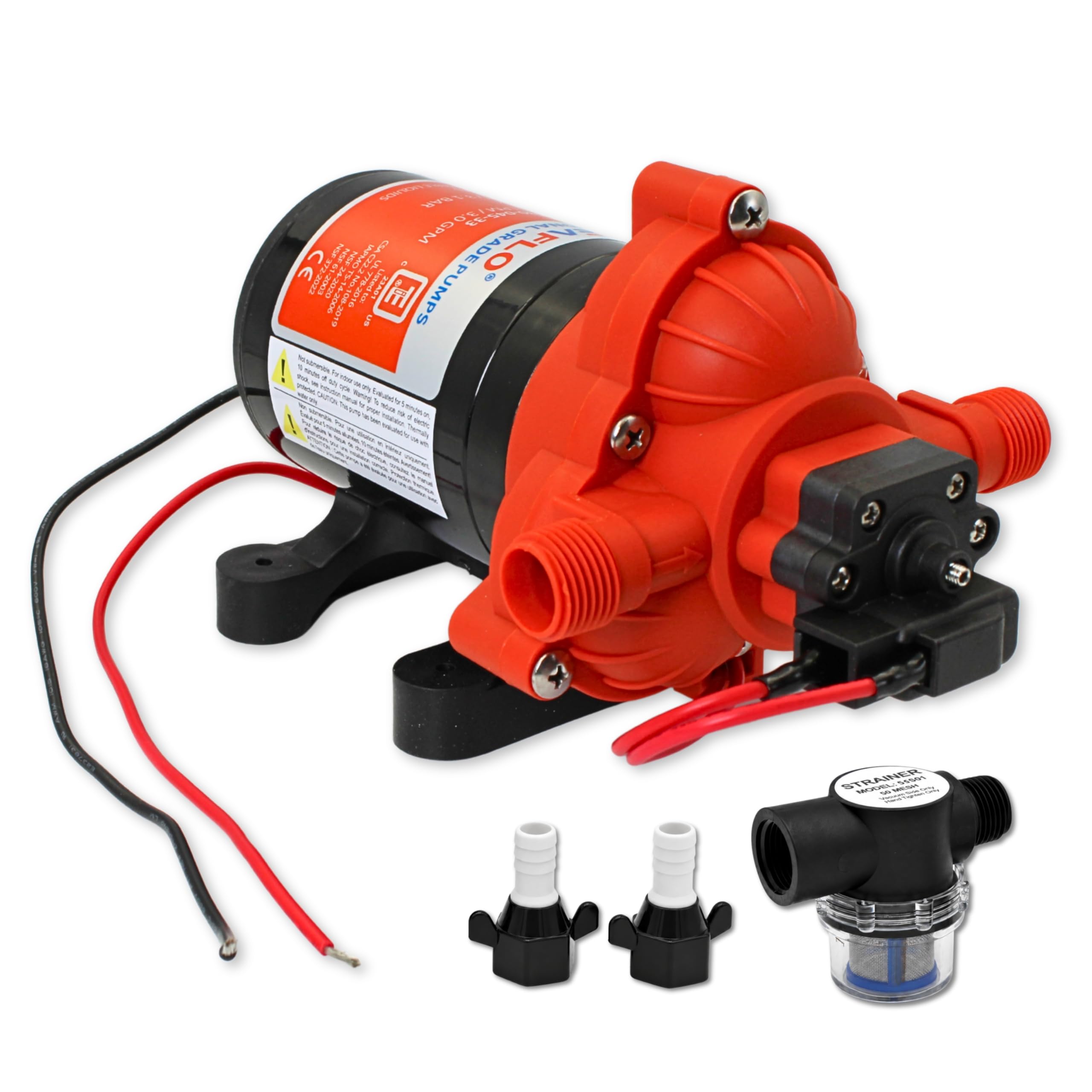
- 4-year warranty at a lower price than Shurflo
- Polypropylene construction — corrosion-resistant and durable
- Adequate for solo/couple rigs using one fixture at a time
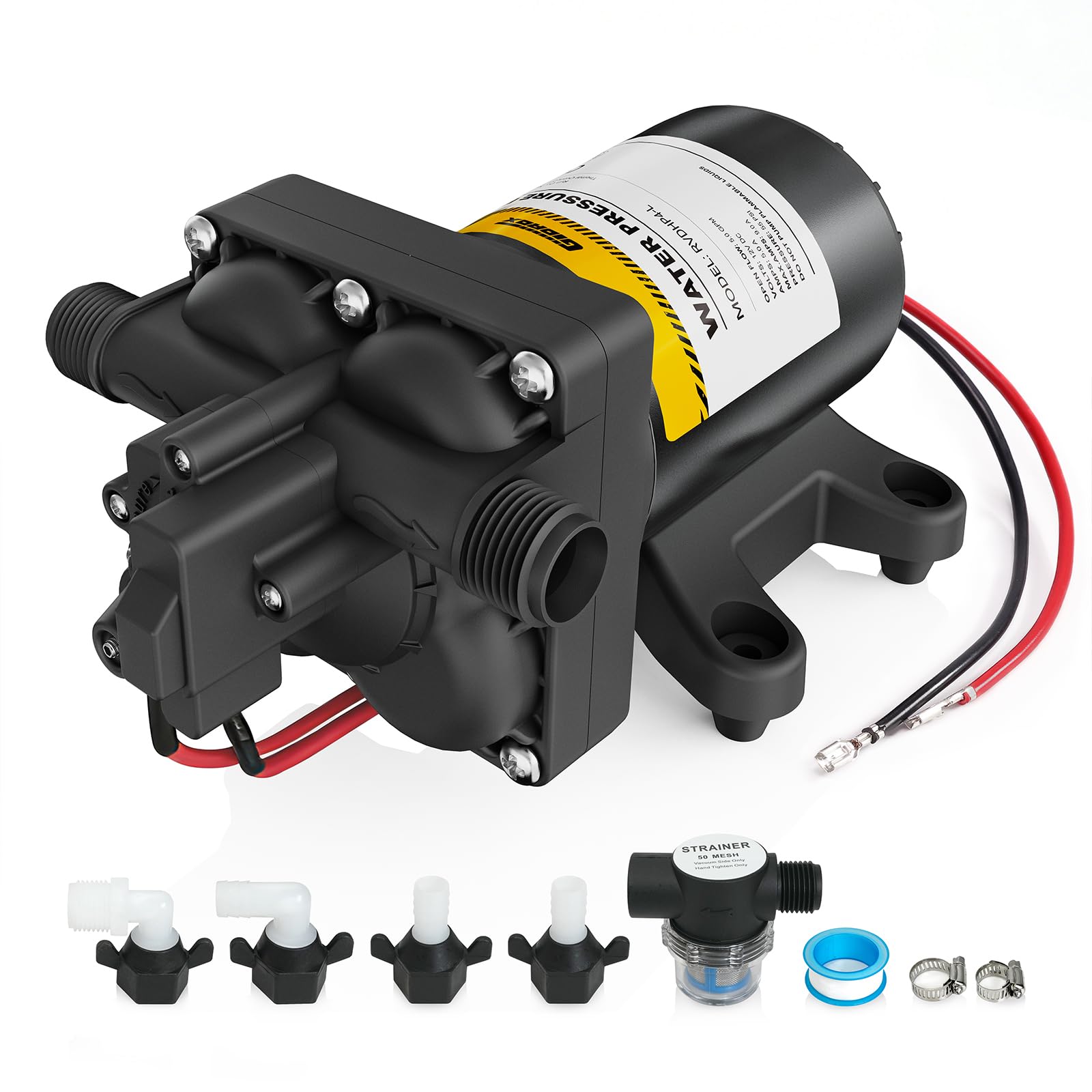
- 5.0 GPM — noticeably better shower pressure than 3.0 GPM OEM pumps
- Stainless steel filter included — better than most generic competition
- 55 PSI matches premium brand specs at lower cost
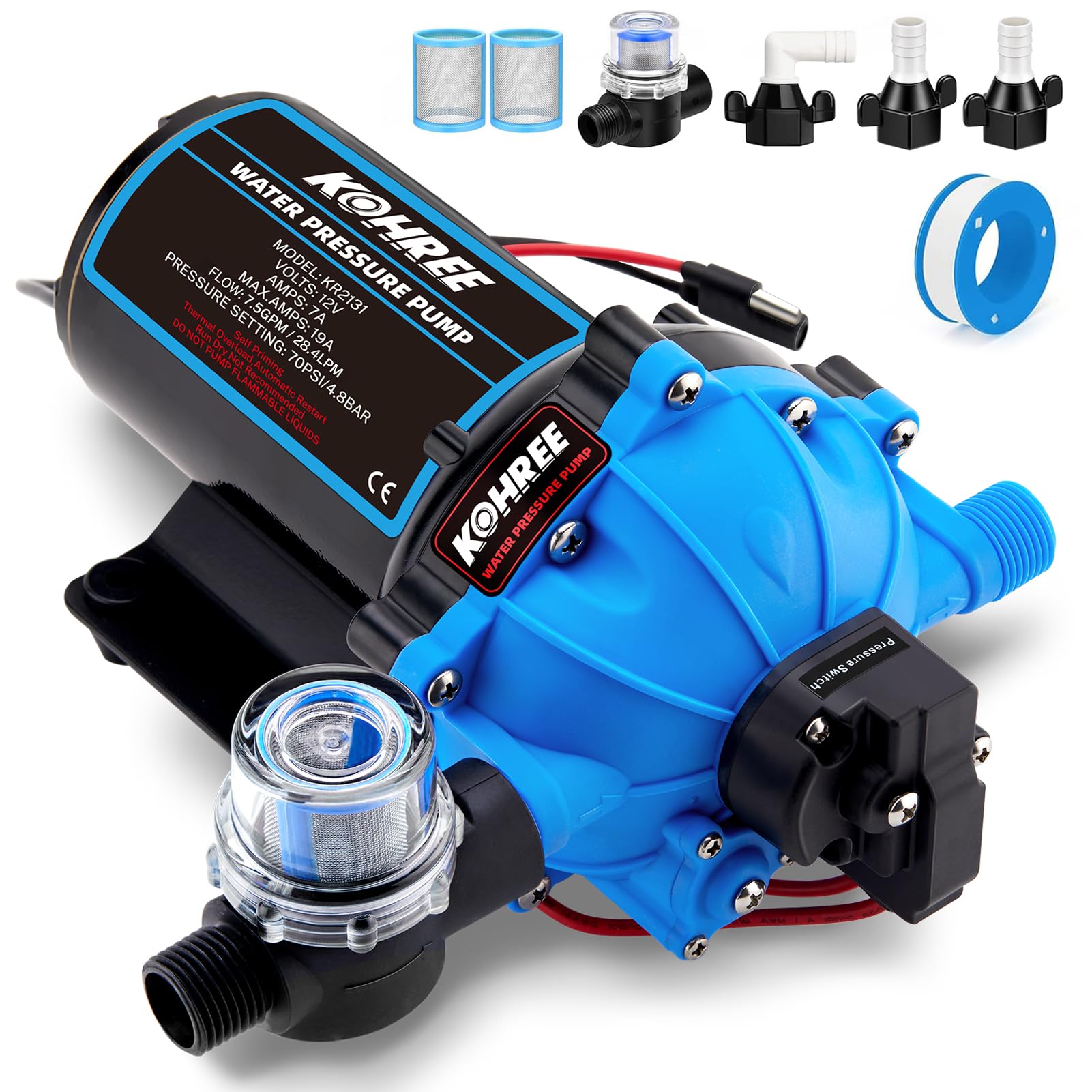
- 7.5 GPM — handles two simultaneous fixtures without pressure drop
- 70 PSI — residential-feel pressure, highest in this roundup
- 5-chamber design runs smoother and quieter than 3-chamber
- Thermal protection prevents dry-run damage

- Adjustable 40–100 PSI — set exactly what your system needs
- 5.5 GPM handles multi-fixture simultaneous use
- Versatile for RV, van build, irrigation, and pressure washing use

- No battery drain — runs off campground power
- 75 PSI boosts weak campground pressure to residential feel
- 5.5 GPM handles multi-fixture simultaneous use
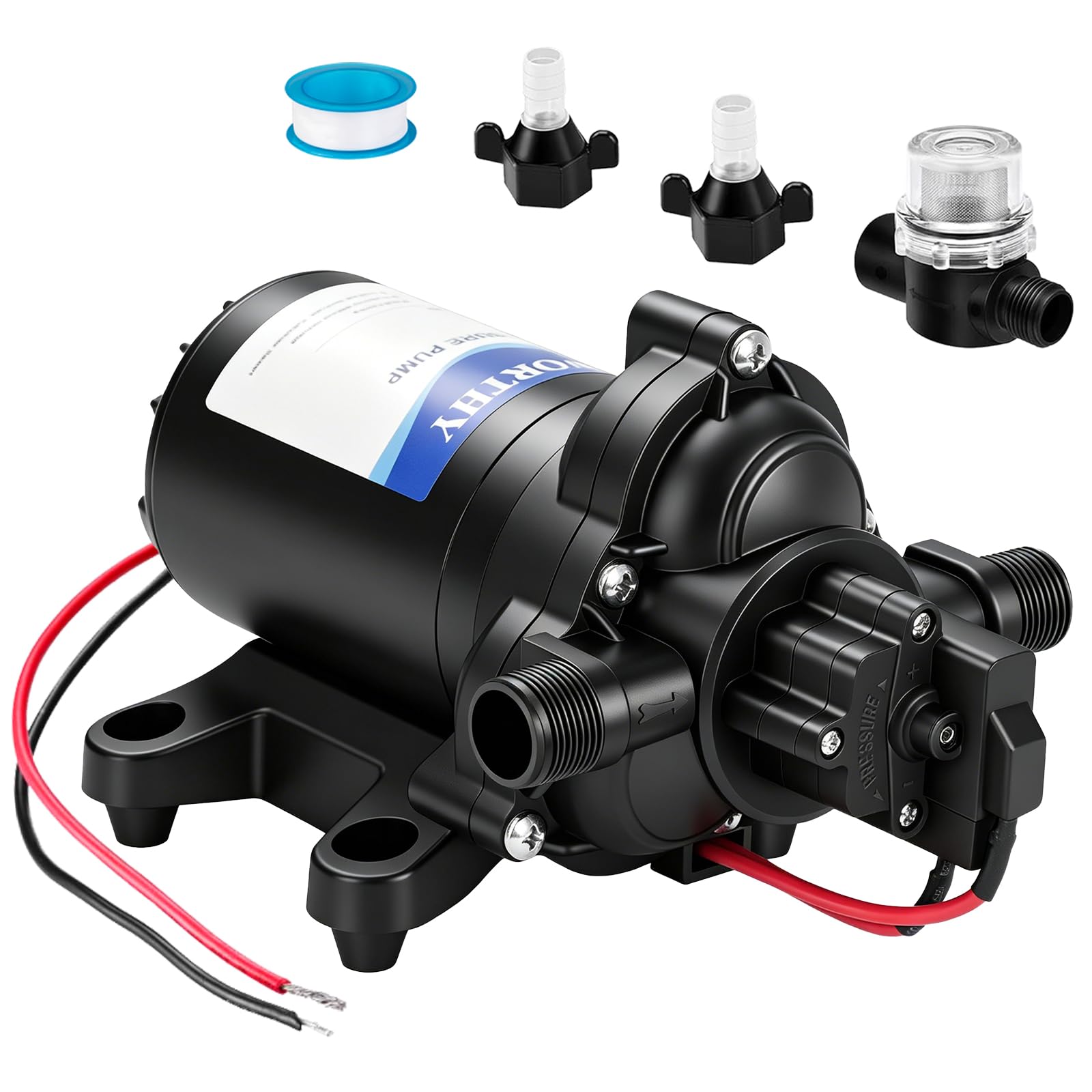
- Lowest price in the roundup for functional 12V pump performance
- 3.5 GPM adequate for sinks and short showers in small rigs
- Quiet operation noted by most owners
Reducing RV Pump Noise — Four Things That Actually Work
- Rubber vibration isolator pad under the pump. The biggest single improvement. Most pumps come with rubber feet but they're inadequate — buy a proper anti-vibration mount pad and fasten the pump to it. This stops vibration from transferring into the floor and walls.
- Flexible braided hose on inlet and outlet. Rigid PVC pipe transmits pump pulses into the plumbing system. Use short lengths (12–18 inches) of flexible braided hose between the pump and the rigid plumbing on both sides.
- Accumulator tank. A small pressure tank (0.5–1 gallon) installed downstream of the pump absorbs pressure pulses and reduces how often the pump cycles. A pump that cycles 8 times per minute cycles 2–3 times per minute with an accumulator. Major noise and wear reduction. Shop accumulators →
- Upgrade from 3-chamber to 5-chamber. If your current pump has a pronounced pulsing sound, it's almost certainly a 3-chamber model. 5-chamber pumps at the same GPM rating run dramatically smoother and quieter.
Installation Tips
- Fuse correctly: Install an inline fuse within 18 inches of the battery connection. Size the fuse at 1.5× the pump's rated amp draw — a 10A pump gets a 15A fuse.
- Inlet filter: Always install a strainer filter on the pump inlet. Most pumps include one; use it. A clogged impeller or torn diaphragm from a piece of grit costs more than the pump.
- Suction line fit: The inlet hose must be rated for suction use — a standard discharge hose will collapse under suction and starve the pump. Look for "suction hose" or reinforced hose specifically.
- Keep suction short: The shorter the inlet hose from tank to pump, the easier it primes. Over 6 feet of suction line and priming becomes more difficult. Mount the pump close to the water tank.
- PTFE tape on threads: Wrap all NPT threaded connections 3–4 times. Thread connections are not tapered enough to seal on their own without tape or pipe dope.
Frequently Asked Questions
A quality pump like the Shurflo 4008 or SEAFLO 42 typically lasts 3–7 years in regular use. The main failure modes are diaphragm wear (replace the diaphragm kit, $20–$30), check valve failure (pump runs but no flow or excessive cycling), and pressure switch failure. Proper installation — suction strainer, vibration isolation, correct fusing — significantly extends pump life. Generic brands typically last 1–3 years before diaphragm or switch failure.
A pump that runs on its own (without a tap open) has a water leak somewhere in the system — the pump is trying to maintain pressure but can't because water is escaping. Check all connections, fittings, toilet valve, and the water heater pressure relief valve. Even a very slow drip will cause the pump to cycle periodically. If you hear the pump run briefly in the night, check everything systematically until you find the drip.
Yes — all 12V RV pumps are designed for battery/solar operation. A typical 3.0 GPM pump draws 7–8 amps while running. For a family using 10–15 minutes of pump time per day, that's roughly 1.2–2 amp-hours per day — a trivial draw for any solar setup. Higher-flow pumps (5.5–7.5 GPM) draw 12–18A while running but still use modest total amp-hours given short run times. Size your fusing to the pump, not the solar system.
For boondocking specifically, prioritize: (1) low amp draw for battery conservation, (2) parts availability for remote repairs. The Shurflo 4008 at 7.5A is the best combination of efficiency and serviceability for remote use. The SEAFLO 42's variable bypass reduces cycling and therefore total amp-hours used. Avoid the high-flow (5.5–7.5 GPM) pumps for boondocking unless you have significant solar — they draw 12–18A while running.

Water and wastewater treatment professional with 18+ years of hands-on experience. Has installed, diagnosed, and repaired 12V diaphragm pump systems in agricultural and remote-site applications. Grade IV Wastewater Certification holder.