How to Size a Water Transfer Pump Before You Buy
Most buyers pick a pump by HP or price and end up with the wrong one. The right number to start with is GPM at your required head pressure. Here's how to figure that out in two minutes:
Step 1 — Decide how fast you need to move water. If you need to fill a 500-gallon tank in one hour, you need at least 9 GPM (500 ÷ 60 = 8.3, plus losses). A 100-gallon tote filled in 20 minutes needs 5 GPM. Most household tanks can be filled adequately by 8–15 GPM; construction dewatering needs 50–160+ GPM.
Step 2 — Calculate total head. Total head = vertical lift (feet from water surface to discharge point) + friction losses. Friction loss in 2-inch hose runs roughly 1–2 ft per 100 ft of horizontal run at low flow, more at high flow. A pump lifting water 20 feet vertically has 20 ft of head. Add friction and you might have 25–30 ft total head.
Step 3 — Read the pump curve, not the max specs. A pump rated "142 GPM" achieves that at zero head (pump sitting in the water, discharging right next to it). At 30 ft of head, that same pump may deliver 80 GPM. At 60 ft, it may be 40 GPM or less. Always find the pump curve or ask the manufacturer what flow you'll get at your actual head.
Which Type of Pump Do You Need?
Specs at a Glance — All Picks
| Pump | Type | GPM | Max Head | Power | Best For |
|---|---|---|---|---|---|
| Honda WB20 | Gas centrifugal | 164 GPM | 105 ft | 7 HP gas | Commercial / agricultural |
| VEVOR 3" | Gas semi-trash | 242 GPM | ~90 ft | 7 HP gas | High-volume dewatering |
| VEVOR 2" | Gas semi-trash | 142 GPM | 98 ft | 7 HP gas | Farm / construction value |
| BILT HARD | Gas semi-trash | 158 GPM | ~95 ft | 7 HP gas | Best complete kit |
| Honda WX10 | Gas centrifugal | 32 GPM | 100 ft | 1 HP gas | Portable / compact |
| 12V Portable | 12V demand | 3–5 GPM | 40–60 ft | 12V DC | RV, detailing, livestock |
| Milwaukee M18 | Cordless submersible | ~7 GPM | ~30 ft | 18V battery | Portable, no fumes |
Top Picks by Application
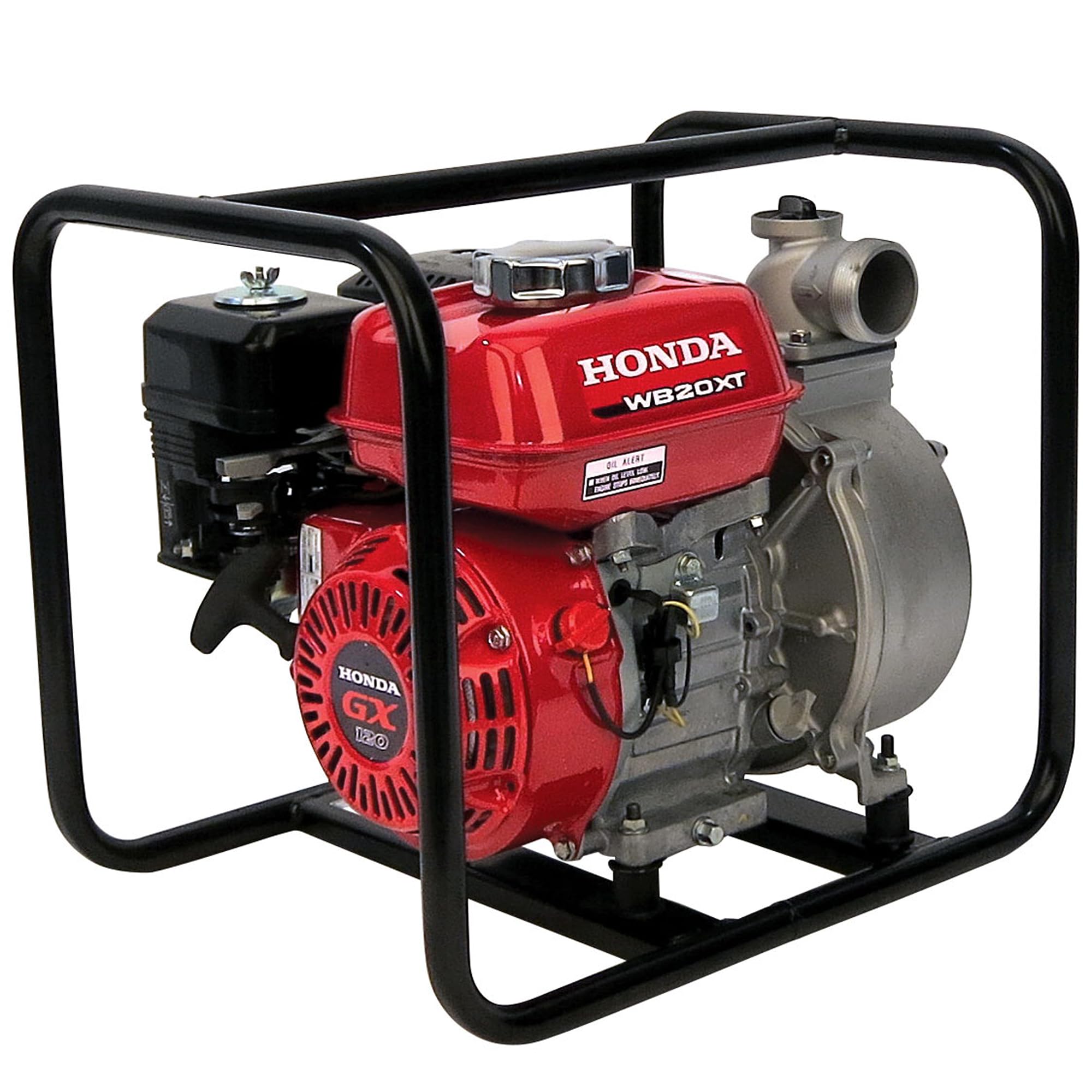
- Honda GX160 engine — parts and service available nationally, 3-year commercial warranty
- Self-priming — fill the casing once, starts pulling water reliably every time after
- 164 GPM at zero head, still strong at 80+ GPM at 30 ft — real-world numbers hold up
- Cast iron volute and impeller — not aluminum, not plastic, lasts decades with oil changes
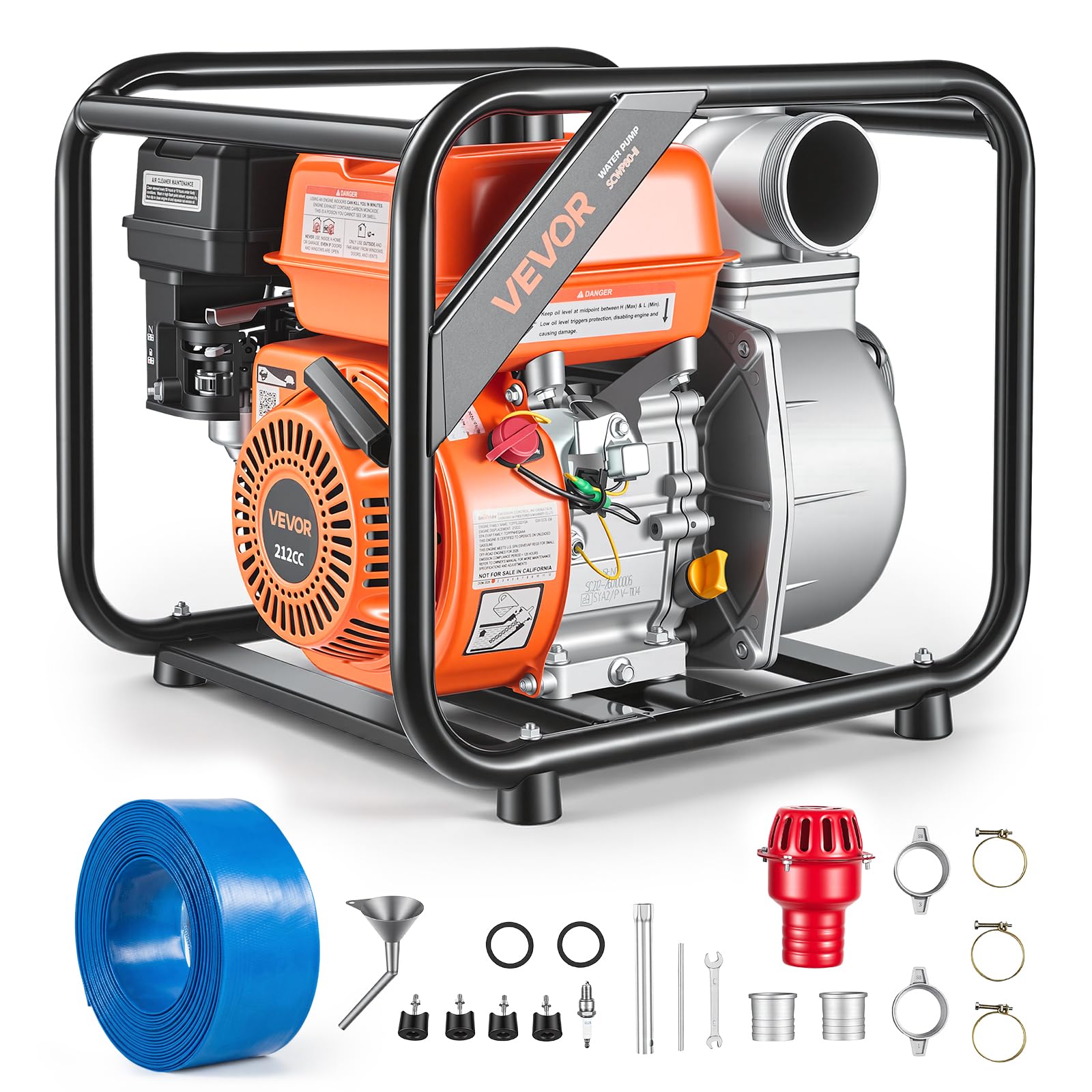
- 242 GPM — over 50% more volume than a 2-inch pump at the same engine size
- Semi-trash handles small debris without clogging — essential for pond and runoff work
- Cast iron impeller outlasts aluminum in abrasive water conditions
- Includes 25 ft discharge hose to get started immediately
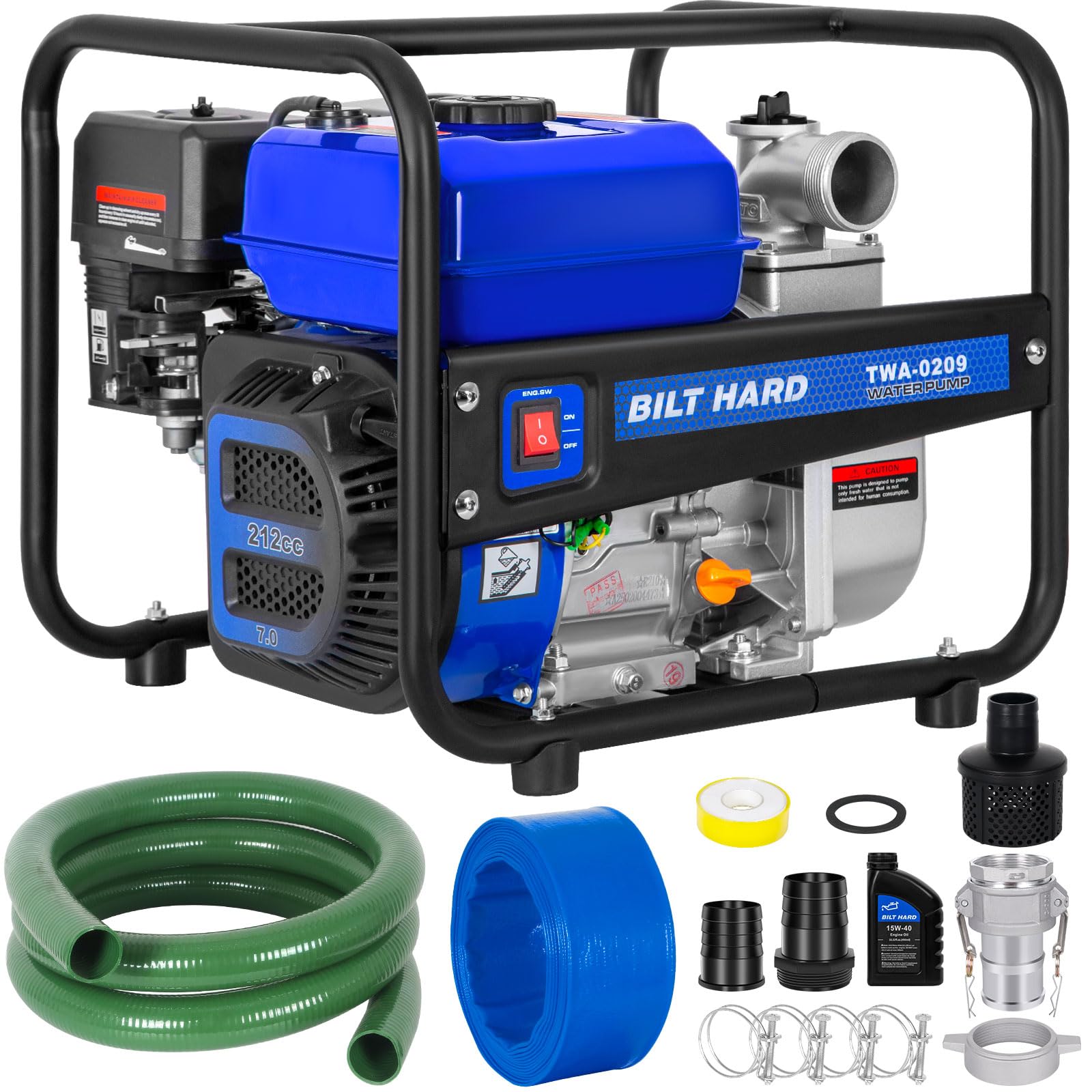
- 50 ft discharge + 12 ft suction hose included — genuinely ready to use out of the box
- 158 GPM at peak — fills a 500-gallon tank in about 3 minutes at low head
- Semi-trash handles light debris without a separate pump

- Cast iron impeller — more durable than aluminum at this price point
- 142 GPM is plenty for filling tanks and dewatering at typical heads
- Semi-trash rated — handles ponds and muddy water
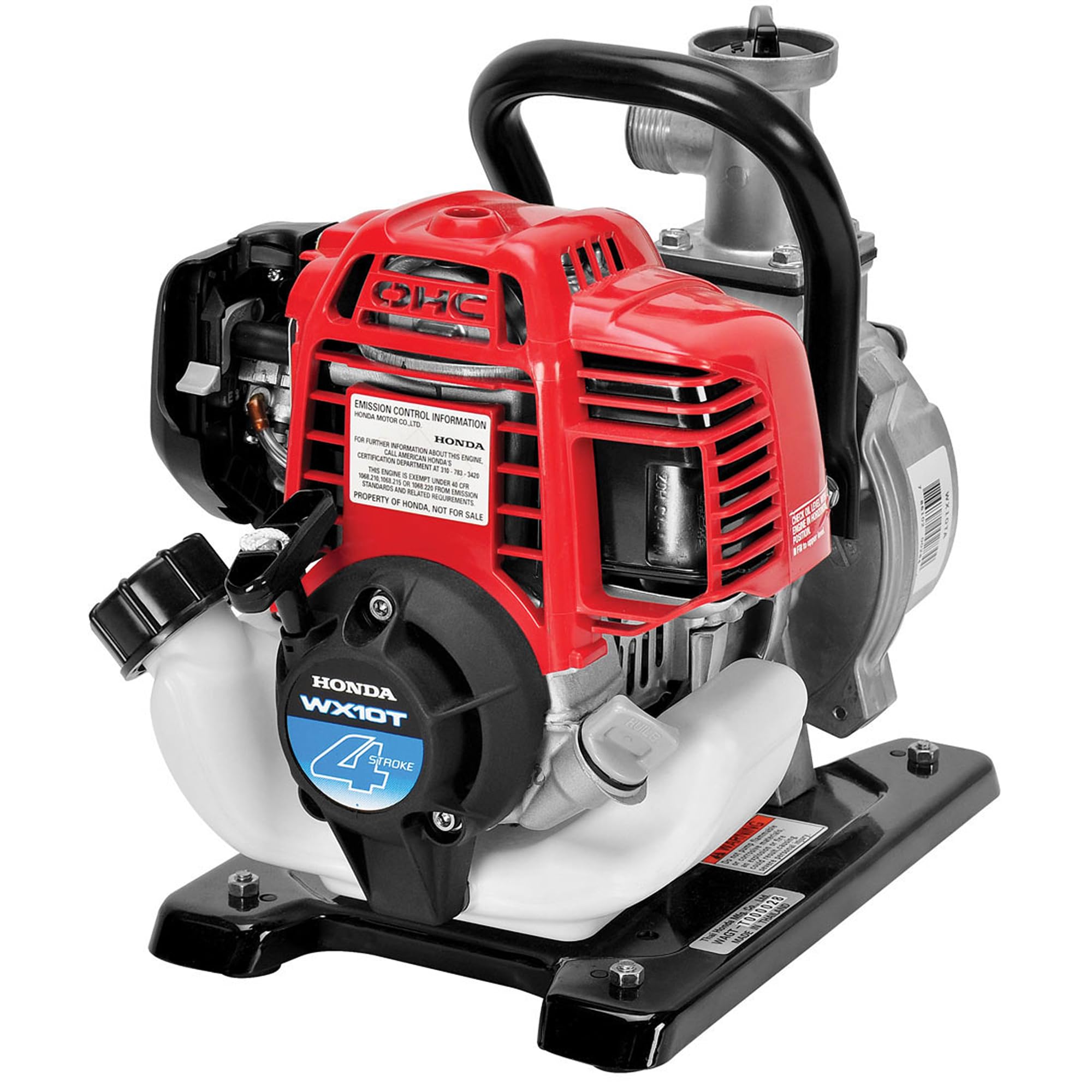
- Honda GX25 engine — same reliability DNA as the WB20 in a 20-lb package
- 100 ft max head — excellent for uphill transfer where larger pumps bog down
- Fits in a truck toolbox — truly portable in a way that 50-lb pumps aren't
Flojet / SHURflo / Generic
- Zero noise, zero fumes — runs off the truck battery while you work
- Self-primes and shuts off when demand stops (demand pump design)
- Fits in tight spaces — mounts inline between tank and delivery point
DeWalt 20V
Ryobi 18V
- Uses your existing tool batteries — no separate power source
- Submersible — drops into the water, zero priming required
- No fumes — usable in enclosed spaces, garages, crawl spaces
Calculate How Long Your Pump Takes to Fill a Tank
Use our Tank Runtime Calculator to get exact fill times at any GPM for any tank size. Or use the quick reference below:
| Tank Size | @ 5 GPM (12V) | @ 30 GPM (Honda WX10) | @ 142 GPM (VEVOR 2") | @ 242 GPM (VEVOR 3") |
|---|---|---|---|---|
| 100 gallons | 20 min | 3.3 min | 42 sec | 25 sec |
| 250 gallons | 50 min | 8.3 min | 1.8 min | 62 sec |
| 500 gallons | 1h 40m | 16.7 min | 3.5 min | 2.1 min |
| 1,000 gallons | 3h 20m | 33 min | 7 min | 4.1 min |
| 2,500 gallons | 8h 20m | 83 min | 17.6 min | 10.3 min |
| 5,000 gallons | 16h 40m | 2h 46m | 35 min | 20.7 min |
| Times are at pump maximum GPM with zero head. Real-world times will be longer due to head pressure, hose friction, and gradual performance loss as the source tank empties. | ||||
Priming: The One Thing That Kills Pump Jobs
The most common problem with centrifugal gas pumps is losing prime — the pump spins but moves no water. Every time this happens it's one of three things:
- Air leak in the suction line. Centrifugal pumps can't pull water if any air is entering the suction side. Check: every hose connection, the suction strainer O-ring, and the pump casing drain plug. A tiny crack in the hose or a loose fitting and you'll fight it all day.
- Suction lift too high. Most centrifugal pumps are rated for 15–25 ft of suction lift in ideal conditions. In practice, 15 ft is the reliable limit. If your water source is more than 15 ft below the pump, move the pump closer to the water or use a submersible pump instead.
- Casing not filled on first start. Self-priming pumps need water in the casing for their first start. Fill it through the priming port. After that, they retain enough for subsequent starts — but if the pump sits empty for weeks, add water again before starting.
Maintenance That Matters
- Oil changes: 4-stroke gas pumps need oil changes every 25–50 hours of operation or annually. Neglect this and the engine wears out 10x faster. Check the manual — most use SAE 10W-30.
- Drain before storage: Water sitting in the pump housing over winter corrodes seals and can crack a cast iron volute if it freezes. Drain the pump completely after the last use of the season.
- Fuel stabilizer: If storing more than 30 days, run the engine on fuel with stabilizer added, or drain the carburetor. Ethanol fuel leaves varnish that clogs the carb jet — the most common cause of "won't start" after storage.
- Impeller inspection: If GPM drops noticeably over time, the impeller may be worn or clogged. Remove and inspect annually on heavily used pumps.
- Suction strainer: Clean the strainer after every muddy water use. A partially blocked strainer reduces GPM and can cause cavitation that damages the impeller.
Also Needed for a Complete Pump Setup
Frequently Asked Questions
A 4-stroke engine runs on straight gasoline and has a separate oil sump — it's quieter, more fuel-efficient, and lasts longer. A 2-stroke engine runs on a gas/oil mix and produces more power per pound — lighter and simpler, but requires mixing fuel and doesn't last as long with heavy use. For serious water transfer work (farm, construction), always choose a 4-stroke. 2-stroke is adequate for light occasional use.
Standard centrifugal pumps handle water with fine sediment but clog on debris larger than about 1/8 inch. Semi-trash pumps handle solids up to ½ inch — ponds, construction runoff, light mud. Trash pumps handle much larger solids (leaves, small rocks, heavy mud) and have a wider impeller clearance. For most farm and construction dewatering use, a semi-trash pump is the right choice. True trash pumps are for heavy debris situations like flooded basements with material in the water.
Horizontally, essentially unlimited — friction loss in long hose runs reduces flow but doesn't stop transfer unless the run is extremely long. Vertically, the pump's max head rating determines how high it can push water. A pump rated 98 ft max head can theoretically lift water 98 feet vertically at near-zero flow. At practical flow rates for filling tanks, stay within 50–60% of the max head rating to maintain useful GPM.
Gas pumps rarely include a suction hose and only some include a discharge hose. The BILT HARD is an exception — it includes both. Honda pumps and most VEVOR units do not include suction hose. You need a rigid or semi-rigid suction hose (not layflat — it collapses under suction) with a foot strainer. Discharge hose can be layflat or rigid. Buy both before the pump arrives or you can't use it.

Water and wastewater treatment professional with 18+ years of hands-on experience operating systems from frac tank flow equalization to refinery DAF units. Has selected, installed, and maintained transfer pumps in agricultural, industrial, and municipal applications. Grade IV Wastewater Certification holder.